Landing
What a stranger sees before they trust you.
Design, before engineering
Describe an idea. Inventable lays out the entire thing as six screens — landing, sign-up, the screen where the job actually gets done — in a design system it picks for that product alone. Then you decide whether it's worth building.
What gets drawn
A hero shot proves nothing. A design system only earns trust once you've seen it hold up under a form, a list of real records, and an empty state. So it draws the set, every time, in order.
What a stranger sees before they trust you.
The shortest path from interested to inside.
The core screen before there's any data in it.
Where the job actually gets done. The one that matters.
One record from the core screen, opened.
Account, billing, and what's connected.
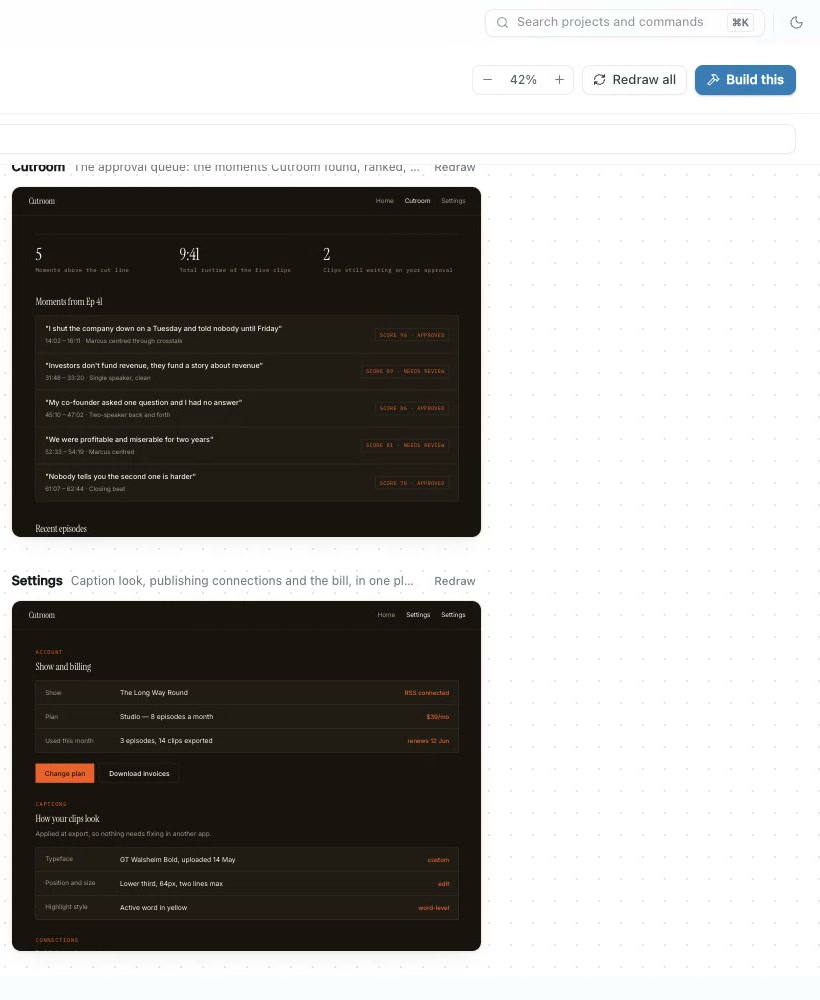
“I shut the company down on a Tuesday and told nobody until Friday”
14:02–16:11 · Marcus centred through crosstalk · score 94, approved
From the core screen of a clipping tool it designed. Not a placeholder — the agent is told to fill the screen with records this product would really have, and the detail screen has to open one that appeared on the list.
The part nobody else does
Most builders hand back their own template with your words in it, which is why everything made with them looks related. Inventable decides a typeface, a palette, a radius and a voice per idea, then holds all six screens to it.
The clipping tool came out dark, warm and set in a serif. A neighbourhood marketplace came out paper and tomato with fat corners. Neither of them looks like this page, and neither looks like the other.
Starting, and what comes after
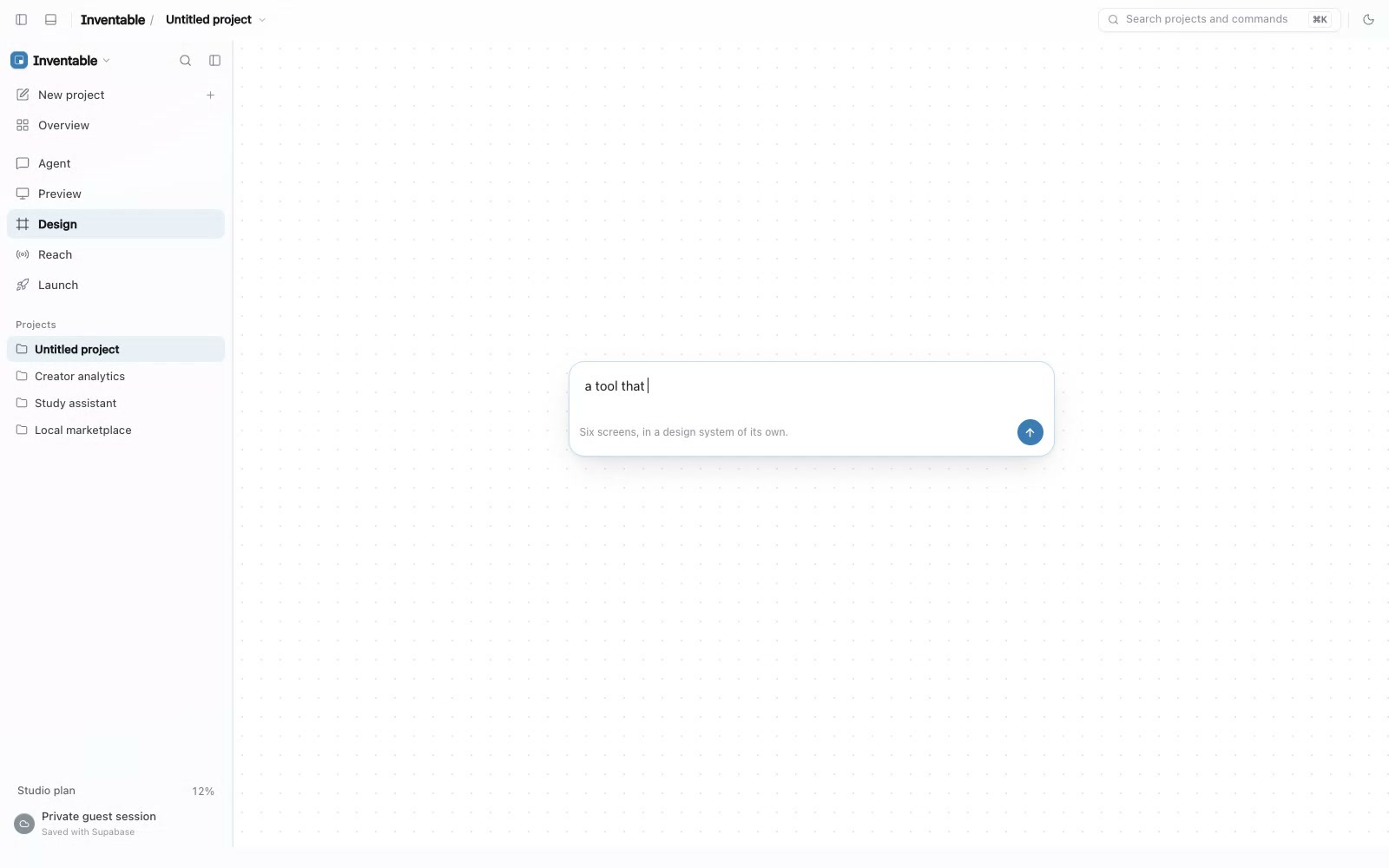
No template picker, no configuration, no tour. Type what you want designed and the screens land on the canvas. Redraw any one of them on its own — darker, fewer steps, billing moved onto the core screen — without disturbing the other five.
When the shape is right, hand it to the build agent. The design is the brief, so nothing gets translated twice.
Before you sign up
Free while it's early